
Running back to life
WHERE DISCIPLINE MEETS PURPOSE AND PAIN BECOMES POWER.
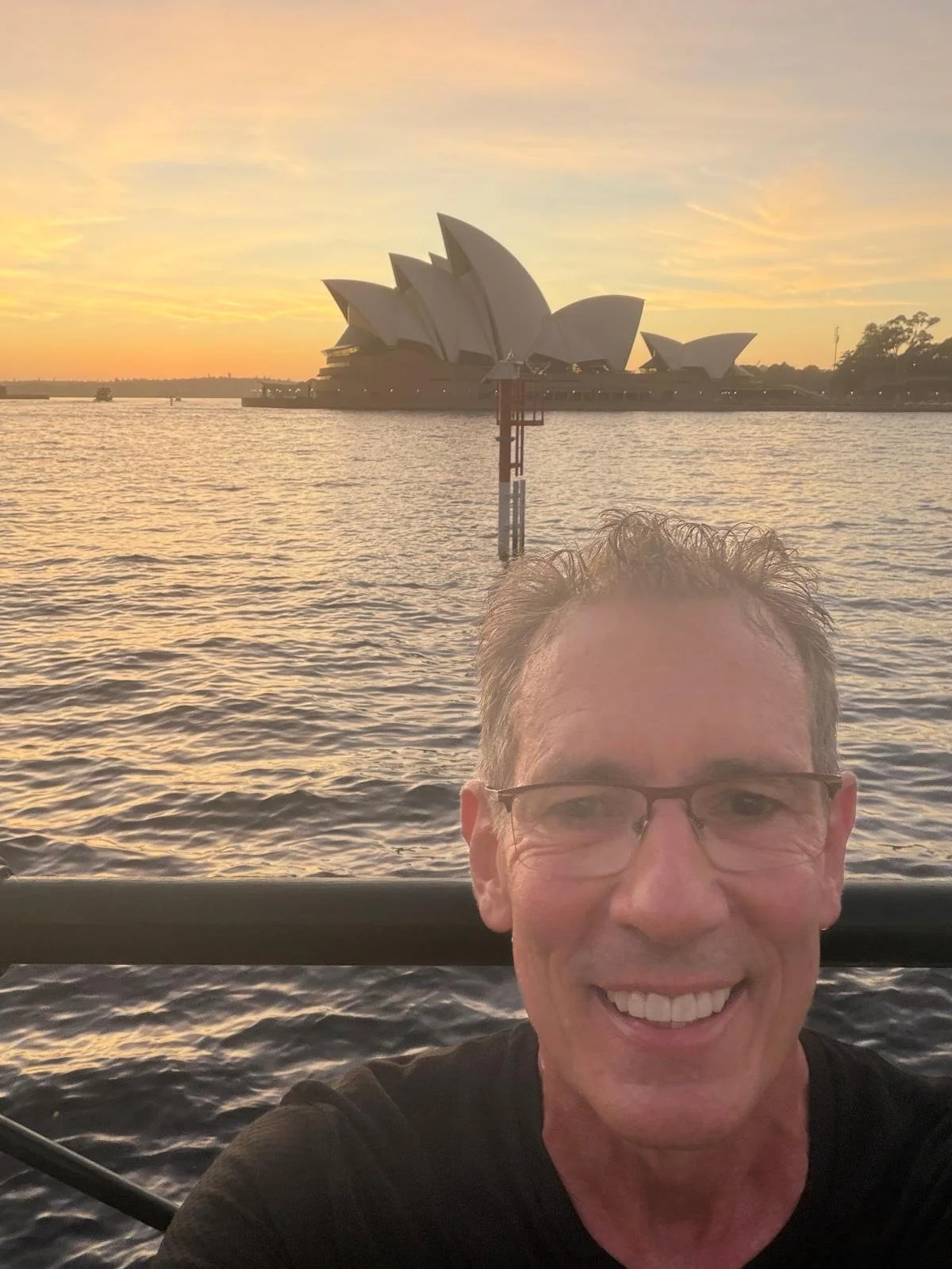
Photo by Bayan Dekker
There are things a body does not forget. The lean into a hill. The way the lungs open after the first three kilometres. The animal ease of a man who was once fast, moving through the world at his own speed, owned by nothing. I knew that feeling once.
Then I spent fifteen years without it, carrying the compound interest of injury and time, telling myself the story that some things, once broken, stay broken. But stories can be wrong. That is the one gift the last two years gave me, delivered at the highest possible price.
What the Body Carries
In the mid-1980s, during national service in South Africa, I discovered I was a runner. Not a jogger. Not a man who ran for his health on weekends. A runner, the kind who attacks a hill, who finds that the legs have more in them than the mind thought, who runs in full military kit and still feels free. At my peak, I ran a 21-kilometre race in 3:10 per kilometre. My friend Clinton Logie, whom I had known since we were ten years old, became my steadfast running partner in our early twenties. We would sprint a brutal three-kilometre climb in the Helderberg Nature Reserve, near Somerset West, and hammer back down just as fast. Young men asking nothing of the world but the chance to move through it.
Then the knees. MCL on the left. MCL on the right. Meniscus damage in both. None of it was surgically repaired. Then, a skiing accident in Morzine in 2012 that took six years to walk comfortably and nearly eight years to live without constant pain. Running disappeared. Movement became the challenge. The body that had once felt like something to trust became something to negotiate with, to manage, to apologise for.
In late 2021, Sandi and I joined the Aphobos CrossFit box. Damian joined soon after, and we quickly became inseparable friends. Same quirky outlook on life. Same determination. We pushed hard. Too hard, as it turned out. I tore my left calf. Both Achilles were damaged by then. Then, in 2023, my back collapsed during a workout. I stood in the gym and broke down. Sandi had to help me put on socks. I could not face another recovery. The body remembers what the mind would prefer to forget. It keeps the ledger. It presents the bill.
What Love Requires
In April 2024, Sandi was diagnosed with Stage 4 ovarian cancer.
There are sentences that rearrange everything. That is one of them. You read them, and the world does not look the same on the other side of the words. The air in the room changes. The weight of ordinary things, a cup of coffee, a pair of shoes, the sound of someone sleeping, becomes almost unbearable in its preciousness.
What happened next is something I will spend a long time trying to understand. While undergoing chemotherapy, Sandi decided we should start exercising again. Not because she felt strong. Because she did not. We went to Reformer Pilates at Virgin Active. While Sandi fought the chemicals they were putting in her body to save her life, I watched her hold a plank. An imperfect one. A short one. But she held it. I stood beside her. I struggled to hold back the tears.
"She was not waiting to feel ready. She had decided that readiness was not the point. Movement was the point. The refusal to be still is the point."
That is the kind of courage that recalibrates a man. You think you understand what it means to be tough until you watch someone you love fight for her life with her body and ask you to keep up. Six months ago, we switched to Urban Flow, founded by Donna Brewer. Strength came back. My spine, which our chiropractor Candice Wilks had described as straight as an ironing board, began to curve again. Something that had felt impossible was declaring itself merely difficult.
One day, out of the blue, Damian asked what interesting things there were to do in Cape Town. We were planning a trip for April. Without thinking, I said: Run the Two Oceans Half Marathon. We both signed up immediately. Neither of us was prepared. Neither of us cared. The commitment was absolute. That is how the best decisions are usually made.
The World as a Training Ground
In early February, while visiting family in Cape Town, we stayed with our friends, Mike and Tonia Crawley, in Noordhoek. One morning, I put on my new pair of Brooks shoes, and I jogged five kilometres around their estate. Slow. Very slow. But the first steps of any reclamation are always humbling. I was not trying to be who I was. I was trying to find out who I still might become.
A week later, I drove to Kleinmond to meet Clinton, the day before we flew back to the UK, and we ran together along the coast as we had decades before. Seven and a half kilometres in fifty-three minutes. Running with someone you have trained with since your twenties gives back an entire history at once. Muscle memory is not just physical. It is relational. I left South Africa having run twenty-seven kilometres in ten days. The body remembered.
Then Australia. Sandi and I flew to Melbourne in early March, where Hugo had come down from the Gold Coast to meet us to watch the F1. Jet lag woke me at four in the morning, and I ran eleven kilometres along the Yarra River in an hour before the city woke up. I felt elated. Confident.
While in the city, I met with Malcolm McClarty. My best friend since school days. A master squash player who survived Stage 4 prostate cancer. He trains future world champions. He told me he survived because he was supremely fit and because he refused to give up. His sister Liz died from cancer two months after his own diagnosis. I knew Liz well. A beautiful soul. Lost forever. And yet he refused to be bent by it. He is competing in the World Squash Championships in Perth this August. Sandi and I have committed to being there. To watch him win his first world championship. These things matter. You show up. You bear witness. You make the promise, and you keep it.
"Here was a man who had looked death in the eye and refused to blink. Who survived Stage 4 prostate cancer through sheer fitness and will. Who answered the hardest question a body can be asked and said: not yet."
After the F1, we flew north to the Sunshine Coast. Hugo and Robbie joined us. My cousin Evelyn flew in from Perth to meet us. One morning, I ran in Noosa National Park. Narrow paths, rocky sections, constant elevation changes, the Pacific on one side, rainforest pressing in from the other. Nine kilometres in exactly one hour. Not fast. Not designed for speed. But one of the most beautiful runs I have ever made. The kind that reminds you why you move at all. Not for a time. Not for a result. For the experience of being a living body in a living world.
Evelyn flew back to Perth, and Sandi and I drove down to the Gold Coast to experience the life that Hugo lives. Early one morning, I went for another run. Just over seven and a half kilometres, winding through a section of national park before returning to the coastline. The pace averaged just under six minutes per kilometre and improved steadily as the run progressed. It was encouraging. The body was remembering.
From there, Sandi and I flew to Sydney, where my niece Natalie met us. And in Sydney, in the darkness before dawn, I ran ten kilometres around the harbour. The city was barely awake when I started. By the time I found my rhythm, the sun was rising gold above the Theatre, and the Opera House was becoming itself again. One of my best runs. The kind where distance flies and everything that brought you there, all the pain and struggle and doubt, suddenly makes sense. The water. The light. The moment. All of it exactly as it needed to be.
The Wall, and What Is Built on It
When I got back to the UK, I set out to run 15 kilometres. The test that would tell me if the Two Oceans was truly possible. At two and a half kilometres, the left calf tightened. By four kilometres, the pain was worsening, not easing. I turned around and walked home. Four kilometres back. The distance was nothing. The silence in my head was enormous. The tears came on the walk back.
From the collision between what I wanted this to mean and what the evidence was showing me. That I had not trained enough. That eighty-two kilometres spread across six weeks is a beginning, not a preparation. The body does not care about metaphors. It cares about adaptation. I had not given it enough time.
"The physical pain was one thing. The brutal honesty was another. I was not dealing with an injury. I was dealing with the truth."
I went to see Candice, who had helped me through the back collapse of 2023. She needled the calf. Used electrical stimulation. Strapped it tightly. And she talked to me about what was possible, which is a different conversation from the one most people want to have. The possible requires you to leave your ego at the door and meet reality on its own terms.
Then I thought of Sandi holding a plank in the middle of chemotherapy. Not because she was ready. Because readiness was not the point. If she could do something that enormous, I could run through a calf that was niggly and frightened and asking me to stop.
It is not about me. I had to learn that. It never was.
The Breakthrough
A week after that failed attempt, I went back. Same route, same seven hundred metres of elevation up and down. I took it slowly. At two and a half kilometres, the calf tightened again. The same panic rose in my chest. But this time I ran through it. It settled. It tightened again. I ran through it again. It stopped fighting me. It gave in.
I finished in one hour and forty-one minutes. Seven minutes per kilometre. By every standard I once held for myself, that pace belongs to someone who is barely walking. Not running. But something shifted. Not in the legs. In the understanding. This race had never been about the time. It had always been about the finishing. Age, injury, and grief are not destinations. They are obstacles. You run through obstacles.
"Slow is still forward. The pace does not matter. Completion is the entire point."
The names came to me on that run. The people this race belongs to.
Sandi, who looked at mortality and chose life. Clinton, who lost his mother to ovarian cancer. Malcolm, who survived Stage 4 prostate cancer through sheer fitness and will. Liz, Malcolm's sister, who did not survive. Hugo, who beat Stage 2 skin cancer. Gary, our dear friend, who fought colon cancer alongside Sandi and refused to let it have the final word. Roland, my cousin, Evelyn's brother, who left this world on his seventh birthday. My mother, who quietly and courageously beat colon cancer without us ever knowing how seriously ill she was. Debbie Ginsberg, one of our dearest friends, whose loss is still deeply felt. David, our boy's dad, who fought for so long till he couldn’t. Jarryd and his own miraculous recovery. It belongs to every person who has fought cancer. Every family that has stood beside it. Every story that continues and every one that ended too soon.
Because truthfully, we all carry more of these stories than we ever should. All these people. All these lives. All these reasons to finish. This journey is not mine alone.
Why Twenty-One
The distance is not arbitrary. From Sandi's diagnosis to her last treatment was twenty-one months. Exactly. Twenty-one months of a relentless treatment regime, of uncertainty and Pilates on days when getting up was itself an act of war. Twenty-one months of the two of us learning that strength is not a feeling. It is a choice you remake every morning, often before you feel capable of making it.
Each kilometre on race day will mark one of those months. Every step forward carries a month of her fight. Every kilometre completed means another month survived, another checkpoint crossed, another time the disease was told not yet. Not today. We are still here and still moving.
This is why Two Oceans will not be the only race. It will be the first. Sandi and I are planning several half marathons in great cities around the world for 2027. Cape Town, London, Paris, Sydney, and others we have not yet imagined. Each race twenty-one kilometres. Each race is a conversation with cancer that says, " You do not have the last word. We are taking it back, one kilometre at a time.”
"We are not running away from what happened. We are running directly into what comes next, using the kilometres to raise awareness and funds, to say out loud that survival is not the end of the story. It is the beginning of the next one."
The Signal
Yesterday morning. Seven degrees, the kind of cold that makes you grateful for the layers you will not need in Cape Town. I ran six kilometres through the forest, past fallow deer moving through the early hours with the ease of animals certain of their place in the world.
There was a steep hill around kilometre one to Biggin Hill, where Spitfires were homed and brave pilots flew, often to their deaths, to save the UK and win the Battle of Britain. These pilots once walked this same hill. The legs wanted to stop there, where the calf threatened again. But this time I ran through it. It settled. It held.
And then the bluebells. They had carpeted the woodland floor in purple. Around kilometre four, something shifted. The calf, which had lived so large in my head for weeks, ceased to matter. My mind released its grip. Attention that had been directed inward turned outward instead. Red and blue arriving together in shifting light, my brain stitching them into purple that did not exist in the world and yet was entirely present in it.
"Not when the calf held. When the calf stopped mattering. When the run stopped being something I was doing and became something I was inside of."
This was the signal. The moment the body and the world became the same conversation, and I was simply listening. The run had stopped being an act of will and had become an act of belonging. The forest. The deer. The cold morning air. The colour that the eye invents from two frequencies of light. All of it one thing. Me inside it, not apart from it.
That is what fifteen years of absence had cost me. Not the pace. Not the fitness. This. The quality of attention that only arrives when the body is moving and the mind finally stops managing and simply arrives. Running, at its deepest, is not performance. It is presence.
I went home knowing the race was ready. Not because the body had proved itself. Because it had remembered what it was for.
Race Day: What the Finish Line Means
One week to Cape Town. Not as the runner I was forty years ago, but as the man the last two years have made me. I will line up carrying what I always carry now: a body that knows what it cost to break, and what it costs to reassemble.
The body, given half a chance and enough reason, remembers. It remembers the hill, the rhythm, and the ease of a man moving through the world at his own pace. It does not forget. It waits. The preparation is done. Now comes the conversation.
I will run slowly. I will run carefully. I will run all the way through. And I will be thinking, at every kilometre, about a woman who decided that the cancer did not get to write the ending. I will think about all those who had survived and those who had not.
Join the campaign
Run with us. In whatever way you can. That might mean the start line. It might mean a donation. It might mean running your own distance, any distance, and sending it to us. But it means joining us in saying that cancer does not have the last word.
For Sandi
Strength is not a feeling. It is a choice.
She taught me that. She still teaches me that. On race day, I will line up as the man the last two years have made me. Older, yes. Humbler, yes. More honest about what the body costs and what it gives. Grateful, in the way that only people who have nearly lost something truly understand gratitude.
I will run for her 21 months; I will run for everyone who could not. I will run until the finish line comes, and then we will see what comes next.
Bayan Dekker · April 2026
CLICK HERE TO SUPPORT SANDI’S CHARITY
BE PART OF SOMETHING THAT TRULY MATTERS. EVERY CONTRIBUTION FUELS CHANGE, AWARENESS AND HOPE.